About

Transform solar uncertainty into actionable insight

Project overview

Reducing uncertainty in
solar energy production

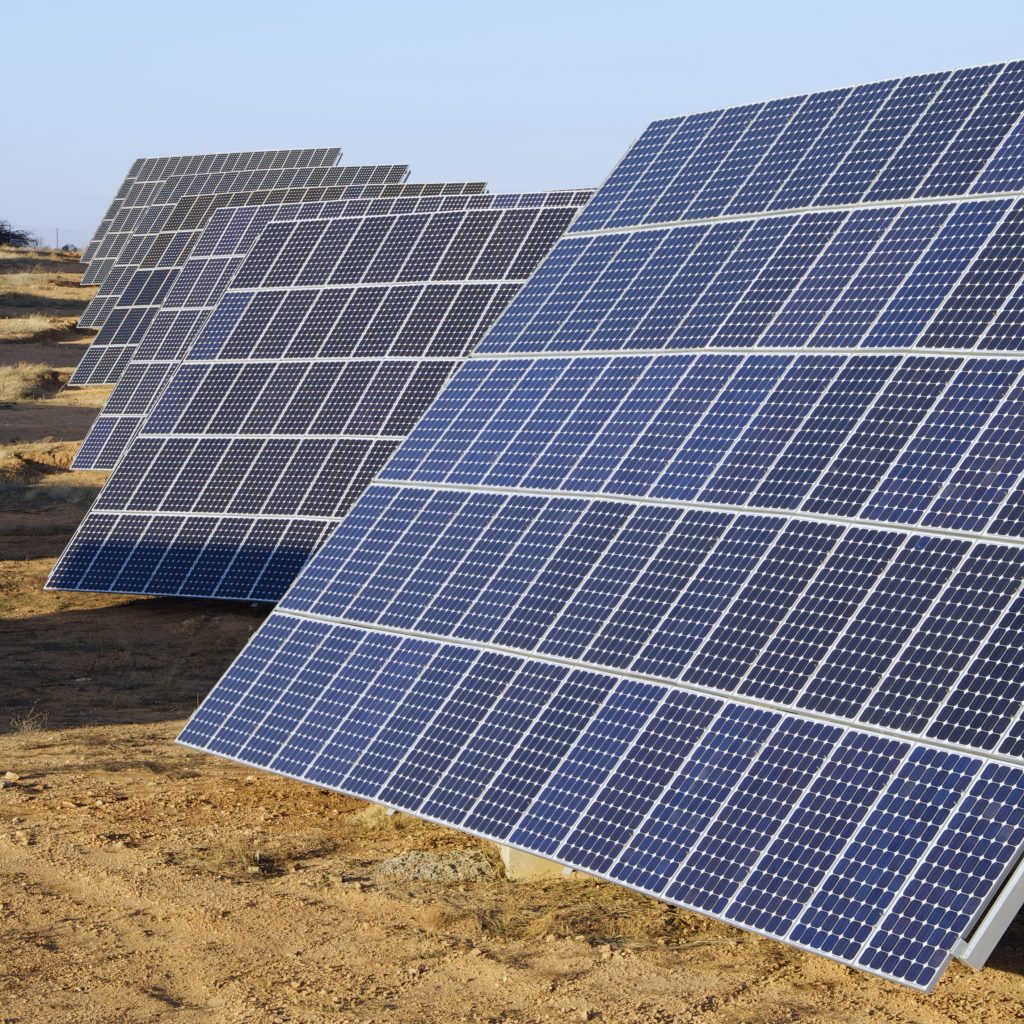
HowMuchSun is a user-driven solar forecasting initiative designed to improve the reliability, bankability, and scalability of large-scale photovoltaic systems in dust-affected regions. The project focuses on Egypt’s Benban Solar Park, one of the world’s largest PV installations, using it as a real-world demonstration of how Earth Observation (EO) data from Copernicus (CAMS and C3S) and atmospheric modelling can reduce uncertainty in solar energy production. 


Funded by ECMWF and developed in collaboration with solar developers and national authorities, HowMuchSun responds to a critical operational challenge faced across the Mediterranean and MENA regions: sudden and hard-to-predict drops in solar output caused by dust, aerosols, and rapidly evolving cloud conditions. 


Impact: forecast accuracy and grid stability

Improving accuracy, strengthening grid stability

Preliminary modelling indicates that improved atmospheric representation can: 


  • Reduce short-term irradiance forecast errors by approximately 10–20% 
  • Improve intraday planning and reduce imbalance penalties 
  • Enable more informed operational decisions during dust events 
  • Support grid operators with earlier visibility of rapid power fluctuations 


By anticipating atmospheric impacts rather than reacting to them, HowMuchSun contributes directly to greater grid stability and more predictable solar generation, a key concern for both energy markets and financiers. 

The HowMuchSun solution

A new approach to solar forecasting

HowMuchSun integrates Copernicus-based atmospheric intelligence into a dedicated solar forecasting chain tailored to dust-affected environments. The service combines: 


  • Aerosol and dust forecasts to quantify irradiance losses before they occur; 
  • Climate and solar radiation baselines to establish robust clear-sky conditions; 
  • High-frequency satellite cloud products, including cloud optical properties; 
  • Multi-layer cloud motion tracking, improving short-term variability detection; 
  • Local in-situ measurements to validate and calibrate model outputs. 


The result is a forecasting system designed to deliver 0–6 hour solar power outlooks, updated at 10–15 minute temporal resolution, directly aligned with operational and intraday market needs. 

The challenge

Solar variability
remains difficult to predict

In desert and semi-arid regions, solar power variability is not driven by the presence of clouds alone. Dust and aerosols are the dominant drivers of irradiance losses for much of the year, creating short-term production fluctuations that are difficult to anticipate with conventional forecasting tools. 
For investors, grid operators, and developers, this translates into: 


  • Higher imbalance risks  
  • Reduced confidence in short-term forecasts 
  • Increased operational and financial uncertainty 
  • Conservative assumptions in project valuation and market participation 


At Benban, where solar generation operates at gigawatt scale, even small forecast errors can have system-wide impacts on grid stability and revenues. 

Replicability across MENA and the Mediterranean

Designed to scale across regions

HowMuchSun is intentionally designed as a scalable and transferable solution. It relies primarily on open-source Copernicus data, requiring no new on-site infrastructure. 
This makes the approach directly applicable to other solar regions facing similar atmospheric challenges, including: 


  • North Africa 
  • The Middle East 
  • Southern Europe 
  • Other dust-affected, sun-rich markets worldwide 


For investors and institutions, this creates a repeatable EO-based framework for assessing operational risk, forecast reliability, and climate exposure across entire solar portfolios, not just a single site. 

Project status

Transitioning to operational deployment

The project is currently active, with user requirements and technical design completed. 
The first operational forecast iteration is planned for release in late 2025, marking the transition from demonstration to deployable service. 


HowMuchSun represents a concrete step toward data-driven, EO-enabled solar intelligence, supporting more resilient energy systems and more confident renewable investment across the Mediterranean and beyond. 

Grow with us

Be the first to benefit
from smarter solar forecasts

Join our pilot network, follow our progress, or subscribe for early access.